

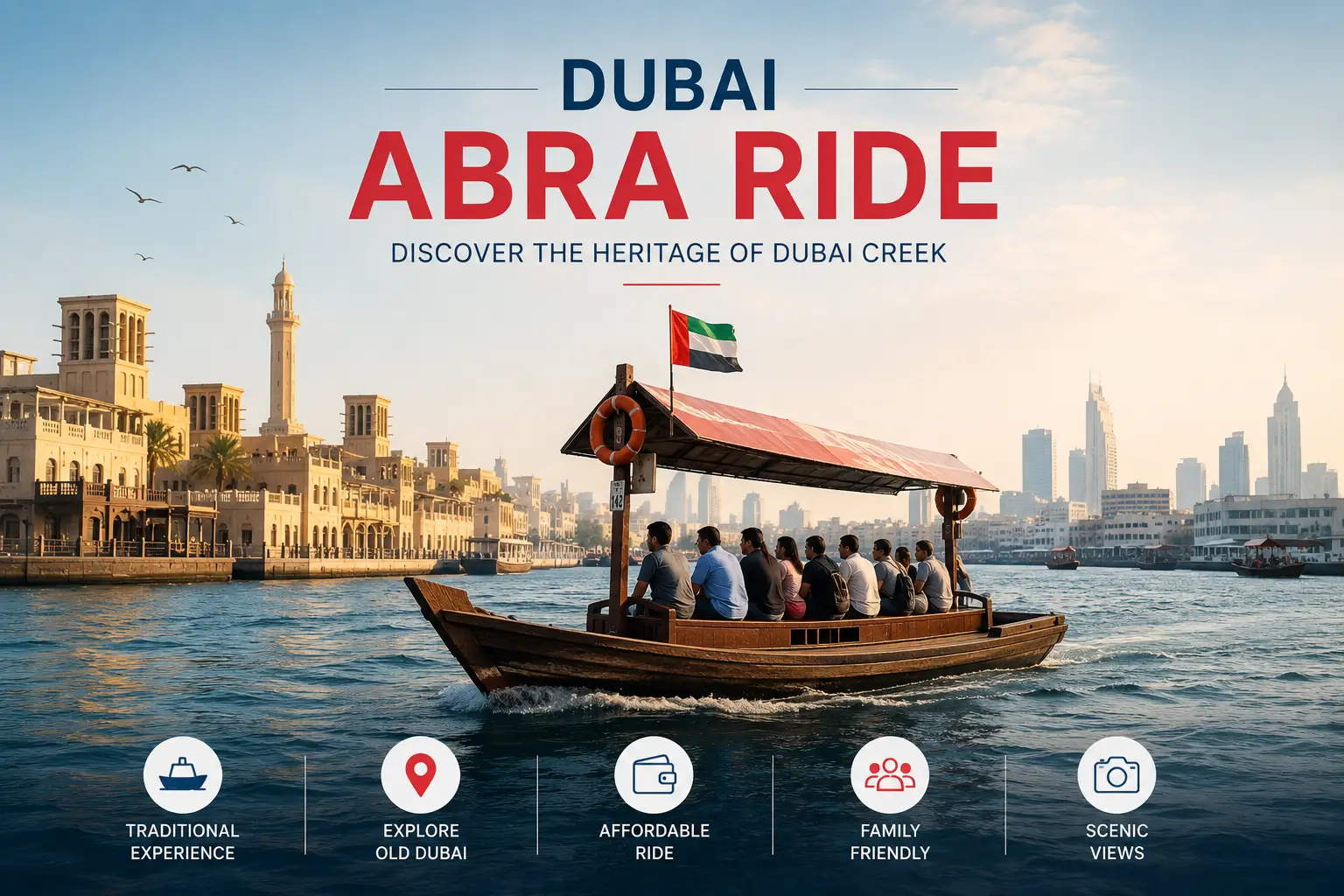
A Dubai abra ride is one of the simplest ways to experience the historic side of Dubai. While the city is famous for its futuristic skyline, luxury attractions, and modern transportation, an abra ride offers a chance to explore its heritage from the water.
An abra is a traditional wooden boat used to cross Dubai Creek for generations. Today, a Dubai abra ride remains both a practical form of transport and a popular experience for visitors who want to see Old Dubai from the water. The traditional motorised abra connecting Bur Dubai and Deira costs AED 1 per passenger per trip, according to Dubai’s Roads and Transport Authority (RTA). Whether you are visiting Al Fahidi Historical Neighbourhood, exploring the traditional souks, or simply looking for an affordable Dubai experience, an abra Dubai experience can easily fit into your itinerary.
What Is a Dubai Abra Ride?
An abra is a small traditional boat that carries passengers across Dubai Creek. Historically, these boats were an important part of everyday transportation between the two sides of the creek. Dubai has changed dramatically over the years, but the abra remains an important part of the city’s heritage.
The traditional motorised abra is particularly associated with Bur Dubai, Deira, and Dubai Creek, giving travellers a simple way to experience the historic heart of the city. Today, RTA operates different types of abras, including traditional and modern versions. Some services are designed primarily for commuting, while others provide sightseeing experiences around Dubai’s waterways.
Why Should You Take an Abra Ride?
An abra ride is one of the easiest ways to experience a different side of Dubai. Instead of looking at the creek from the shore, you can actually travel across the water and see the historic neighbourhoods from a different perspective. The experience is also very affordable compared with many other Dubai sightseeing activities. A traditional Creek crossing costs just AED 1, making it an easy addition to almost any travel budget.
It is particularly useful when visiting attractions on both sides of Dubai Creek. You can explore Al Fahidi, cross the creek by abra, and continue towards Deira’s traditional markets without needing to make a long road journey. For first-time visitors, a Dubai abra ride is also a convenient way to experience the city’s older neighbourhoods without spending much time or money.
Dubai Creek Abra Ride: Popular Routes and Stops
A Dubai abra ride is especially useful when your itinerary includes both sides of Dubai Creek, as the traditional crossings connect several important heritage areas. A Dubai Creek abra ride is one of the easiest ways to explore Old Dubai and travel between the historic areas of Bur Dubai and Deira.
Bur Dubai to Deira Old Souq
The Bur Dubai Abra Station to Deira Old Souq Abra Station route is one of the classic crossings. The service operates in both directions and is currently listed by RTA at AED 1 per passenger per trip, with cash payment. This Dubai abra ride takes only a short time, but it can make travelling between the two historic districts much more enjoyable.
This route is especially convenient if you are exploring Al Fahidi and want to continue your day in Deira. You can spend some time walking around Bur Dubai, visit the historic neighbourhood, and then take the abra across the creek to explore the traditional souks.
Dubai Old Souq to Al Sabkha
Another traditional route connects Dubai Old Souq and Al Sabkha. RTA currently lists this service as a 24-hour route, with a fare of AED 1 per passenger per trip. This crossing can be useful for travellers exploring Deira’s older commercial areas and traditional markets. If you are exploring Deira on foot, this Dubai abra ride can save time while giving you a closer look at life around Dubai Creek.
Al Fahidi and Other Heritage Routes
RTA also operates heritage abra routes connecting locations including Al Fahidi, Al Sabkha, Deira Old Souq, Al Seef, and Baniyas. These routes are particularly useful for visitors who want to combine several heritage areas during the same day. Because operating hours can vary by route and day, it is sensible to check the latest RTA timetable before travelling.
Dubai Abra Ride Price and Fares
The Dubai abra ride price depends on the type of abra and the route you choose. For the traditional Creek crossing, the current RTA fare is AED 1 per passenger per trip. Payment for these traditional crossings is listed as cash. For travellers looking for a budget-friendly activity, the traditional Dubai abra ride remains one of the most affordable experiences in the city.
Other abra experiences have different fares. For example, RTA’s heritage abra service on the Dubai Water Canal offers a 45-minute round trip for AED 25 per person, while a private charter can cost AED 300 per hour. This means you can choose between a simple and inexpensive Creek crossing or a longer sightseeing experience, depending on your itinerary and budget.
Best Time for a Dubai Abra Ride
The best time for a Dubai abra ride depends on the weather, your itinerary, and the type of experience you want. Choosing the right time can make your Dubai abra ride more comfortable, especially when you also plan to walk around the surrounding heritage areas.
Morning
Morning can be a good choice if you want to explore Old Dubai when the weather is relatively comfortable, and the area is less hectic. You can combine the ride with a visit to Al Fahidi Historical Neighbourhood and nearby heritage attractions.
Late Afternoon
Late afternoon is another excellent option, particularly during the cooler months. You can explore the historic district first and then take an abra towards Deira as the day begins to cool. The changing light over Dubai Creek can also make this a good time for photographs.
Evening
An evening ride offers a different atmosphere. The surrounding streets, shops, and waterfront areas become livelier, while the lights around the creek create an attractive setting. If you are visiting traditional markets, an evening crossing can fit naturally into your itinerary.
Abra Ride During Dubai Winter
Winter is generally one of the most comfortable periods for exploring Dubai outdoors. Since an abra ride involves spending time on the water and often walking between nearby attractions, cooler weather can make the overall experience more enjoyable. The cooler season is particularly suitable for a Dubai abra ride because you can enjoy the boat journey and continue walking around Old Dubai afterwards.
You can comfortably combine the ride with Al Fahidi Historical Neighbourhood, Dubai Creek, the traditional souks, and nearby cultural attractions. During the hotter months, consider going earlier in the morning or later in the evening. Carry water and protect yourself from the sun when walking around the creek.
What Can You See on a Dubai Abra Ride?
An abra ride is short, but the surrounding area has plenty to see. An abra boat Dubai experience gives visitors a different view of Dubai Creek, with traditional boats, waterfront buildings, trading areas, and historic neighbourhoods visible during the crossing. During a Dubai abra ride, keep an eye on both sides of the creek because the short journey offers changing views of the waterfront and historic trading areas.
As you cross Dubai Creek, you can see traditional boats, waterfront buildings, old trading areas, and parts of Deira and Bur Dubai. Depending on your route, you can also continue exploring historic souks and heritage districts after getting off the boat. One of the biggest advantages is that the ride connects experiences rather than being an isolated attraction. You can use it as part of a larger walking itinerary around Old Dubai.
Dubai Abra Ride and Al Fahidi Historical Neighbourhood
If you are already planning to visit Al Fahidi Historical Neighbourhood, adding an abra ride makes particular sense. Start by exploring the historic lanes, traditional buildings, cultural spaces, and nearby attractions in Bur Dubai. From there, walk towards the marine station and take an abra across the creek.
Once you reach Deira, you can explore the traditional souks and surrounding streets. This creates a simple half-day itinerary that combines Dubai’s heritage, architecture, waterways, and traditional markets.
Is an Abra Ride Suitable for Families?
Yes. A traditional abra ride is generally a simple experience that can work well for families, couples, and solo travellers. Children may particularly enjoy being on the water, while parents can combine the ride with nearby attractions rather than planning a separate activity around it.
If you are travelling with young children, stay seated during the journey and follow the crew’s instructions. Families may also want to consider the weather when deciding when to visit. A Dubai abra ride can also be a nice addition to a family day around Dubai Creek because it does not require a long time commitment.
Tips for Taking an Abra Ride
A few simple tips can make the experience easier. Check the RTA timetable and route information before travelling because operating times can vary between routes. Carry some cash if you are using the traditional Creek crossing, as RTA currently lists cash payment for the AED 1 service. If you are searching for an affordable abra Dubai experience, the traditional Creek crossing is one of the easiest options to include in an Old Dubai itinerary.
Try to combine the ride with nearby attractions instead of travelling to the station only for the boat ride. Al Fahidi, Dubai Creek, the Old Souq, and Deira’s traditional markets can all be included in the same outing. If photography is important to you, keep your phone or camera ready before boarding. The ride is short, so you may not have much time to prepare once the boat leaves.
Planning Your Abra Experience with SilenceTrip
Planning a Dubai itinerary is easier when nearby attractions are grouped. SilenceTrip helps travellers explore Dubai tours, attraction tickets, sightseeing experiences, cultural attractions, and family-friendly activities.
An abra ride can be combined with a visit to Al Fahidi Historical Neighbourhood, Dubai Creek, traditional souks, and other Old Dubai attractions. This makes it particularly useful for travellers who want to experience more than Dubai’s modern landmarks. Rather than spending an entire day on one activity, you can include the abra crossing as part of a heritage-focused itinerary and then continue exploring the surrounding area.
Final Thoughts
An abra ride in Dubai may be a simple experience, but it offers a memorable way to connect with the city’s history. Crossing Dubai Creek on a traditional boat gives visitors a glimpse of the older side of Dubai and provides a pleasant break from the city’s modern attractions. The classic Bur Dubai – Deira crossing is particularly attractive because it is inexpensive, convenient, and easy to combine with Al Fahidi, Dubai Creek, and the traditional souks. For a longer sightseeing experience, RTA also operates modern and heritage abra services on other waterways.
Tip: RTA’s routes, fares and operating times can change, so check the latest official timetable before your visit.
Stay Connected with SilenceTrip
Stay connected with SilenceTrip for family travel ideas, Dubai attraction guides, sightseeing inspiration, and practical UAE travel tips. Follow SilenceTrip on Facebook and Instagram for new travel ideas and inspiration for your next Dubai adventure.
FAQs - Abra Ride in Dubai
A traditional abra crossing on Dubai Creek currently costs AED 1 per passenger per trip. Fares can differ for sightseeing and private abra services.
The most popular traditional crossings operate between Bur Dubai and Deira. You can also find abra services on other Dubai waterways, including heritage and sightseeing routes.
Late afternoon and evening are particularly enjoyable, especially during the cooler months. Morning is also a good option if you prefer quieter surroundings.
A traditional Creek crossing is a short journey, generally taking only a few minutes. However, the exact duration depends on the route and service you choose.
Yes. An abra ride pairs especially well with Al Fahidi Historical Neighbourhood, Dubai Creek, Old Dubai, and the traditional souks, making it easy to create a half-day heritage itinerary.