

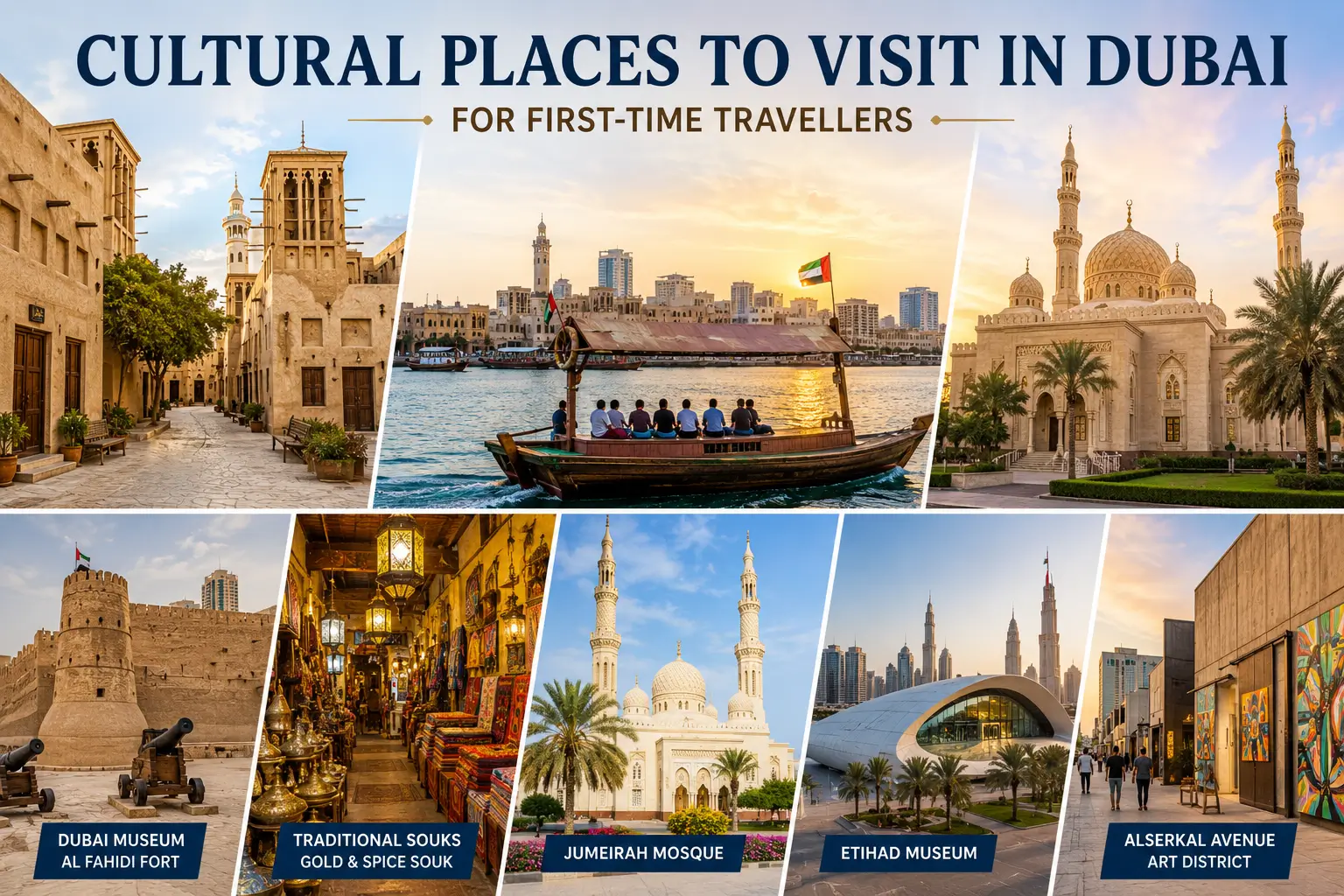
Dubai is best known for its futuristic skyline, luxury shopping malls, world-class attractions, and modern lifestyle. However, behind the skyscrapers is a rich cultural side that tells the story of how the city developed from a small trading and fishing community into one of the world’s most popular destinations.
Exploring the cultural places to visit in Dubai is a great way to discover the city’s history, traditions, architecture, and local lifestyle beyond its modern attractions. Historic neighbourhoods, museums, mosques, traditional markets, and Dubai Creek offer a different perspective that you may not experience at the city’s modern attractions. Whether you are interested in history, architecture, Emirati traditions, or local food, Dubai has several cultural experiences worth adding to your itinerary. This guide covers some of the best places to explore and practical tips for making the most of your first cultural experience in Dubai.
Why Explore Dubai’s Cultural Side?
Dubai’s modern attractions are impressive, but its history is equally interesting. Before the city’s rapid development, Dubai’s economy was closely connected to fishing, pearl diving, trading, and Dubai Creek.
Exploring these cultural places in Dubai gives you a chance to understand this transformation and discover the traditions that have shaped the city. You can walk through traditional neighbourhoods, see historic architecture, explore local markets, and learn about Emirati customs. The best part is that many cultural attractions are located around Old Dubai, making it possible to visit several places during the same day. For travellers searching for cultural places to visit in Dubai, Old Dubai is an excellent starting point because several heritage attractions are located close to each other.
Al Fahidi Historical Neighbourhood
Al Fahidi Historical Neighbourhood is one of the best cultural places to visit in Dubai for first-time travellers seeking to explore the city’s heritage. Located near Dubai Creek, the neighbourhood is known for its narrow lanes, traditional buildings, courtyards, and distinctive wind towers.
Walking through the area feels very different from modern Downtown Dubai. The architecture provides an insight into traditional Gulf living, while cultural spaces and galleries give visitors opportunities to learn more about Dubai’s past. Take your time rather than rushing through the neighbourhood. Its small lanes and traditional details are best appreciated on foot. Among the cultural places to visit in Dubai, Al Fahidi stands out for its authentic atmosphere and traditional Emirati architecture.
Dubai Creek
Dubai Creek has been central to Dubai’s history for generations. The waterway once supported fishing, pearl diving, and trade and continues to be an important part of the city’s identity.
A walk along the creek lets you see traditional boats, waterfront activity, and the older districts of Dubai. You can also take a traditional abra across the creek, which is a simple and memorable way to experience the area. For first-time visitors, combining Dubai Creek with Al Fahidi and the nearby souks creates one of the best cultural experiences in Dubai. This makes Dubai Creek an essential stop when exploring the cultural places to visit in Dubai for the first time.
Dubai Museum and Al Fahidi Fort
Al Fahidi Fort is one of Dubai’s most recognisable historic structures and is closely associated with the city’s heritage. The fort provides a reminder of Dubai’s development before the modern skyline transformed the city.
Visitors interested in local history can explore the surrounding heritage area and discover why it is among the most interesting cultural places to visit in Dubai. Before visiting, check the latest operating information because access to individual museum facilities can change.
Traditional Souks of Old Dubai
No visit to the cultural attractions in Dubai feels complete without exploring its traditional markets. The Gold Souk in Deira is famous for its extensive jewellery displays, while the Spice Souk offers colourful spices, herbs, dried fruits, and other traditional products.
The textile markets around Bur Dubai are another interesting area to explore. Even if you are not planning to shop, walking through the souks gives you a sense of Dubai’s historic commercial culture. Remember that bargaining may be part of the shopping experience in some traditional markets, but it is always better to negotiate politely. These traditional markets are among the most popular cultural sites in Dubai for first-time visitors.
Jumeirah Mosque
Jumeirah Mosque is one of the most important cultural places to visit in Dubai for travellers interested in Islamic architecture and Emirati culture. The mosque is particularly notable for its elegant design and welcoming approach to cultural understanding. Guided visits can provide information about Islamic traditions, local customs, and Emirati culture.
When visiting a mosque, dress modestly and follow the site’s visitor guidelines. A cultural visit is not just about seeing the architecture; it is also an opportunity to understand and respect local traditions.
Etihad Museum
For travellers who want to understand the history of the United Arab Emirates, the Etihad Museum is one of the most informative Dubai cultural attractions to add to an itinerary. The museum focuses on the country’s formation and the events surrounding the establishment of the UAE. Exhibits and historical material help visitors understand how the seven emirates came together to form the federation.
It is particularly useful for first-time visitors who want some historical context before exploring other parts of the UAE. Adding the museum to your itinerary can make your exploration of the cultural places to visit in Dubai more informative and meaningful.
Alserkal Avenue
Dubai’s cultural identity is not limited to historic buildings and traditional markets. Contemporary culture is also an important part of the city. Alserkal Avenue in Al Quoz is known for its galleries, creative spaces, exhibitions, studios, and cultural events. It is also one of the more contemporary cultural places in Dubai, especially for travellers interested in art, design, and creative expression.
If you enjoy contemporary art and design, consider checking the exhibition schedule before visiting because programmes can change throughout the year.
Experience Emirati Food
Food is another way to experience the cultural side of Dubai and understand local traditions. Instead of limiting your trip to international restaurants, try some traditional Emirati dishes and explore local dining options. Dishes such as machboos, harees, luqaimat, and chebab can introduce you to flavours connected with the region’s culinary traditions.
You can also explore traditional cafés and restaurants around Old Dubai for a more local atmosphere.
Take a Traditional Abra Ride
A traditional abra ride is one of the easiest cultural experiences in Dubai to add to your itinerary. These small boats have long been associated with Dubai Creek and continue to provide crossings between areas of Old Dubai. The journey is short, but it offers a simple way to see the creek and surrounding historic districts from the water.
You can combine an abra ride with a visit to Al Fahidi Historical Neighbourhood, the souks, and other Old Dubai attractions. It is especially worthwhile when exploring the cultural places to visit in Dubai around Dubai Creek and Old Dubai.
Best Time to Explore Cultural Places in Dubai
The cooler months are generally more comfortable for exploring Dubai cultural attractions and outdoor heritage areas. Walking through Al Fahidi, visiting the souks, and exploring Dubai Creek can be more enjoyable when temperatures are moderate.
During the hotter months, consider visiting outdoor areas early in the morning or later in the afternoon. Indoor museums and cultural spaces can be useful during the hottest part of the day. Always check the latest opening hours and visitor requirements before heading out, particularly during public holidays or special events.
Tips for First-Time Travellers
A little preparation can make your cultural sightseeing experience much easier. Dress respectfully when visiting religious and cultural sites, particularly mosques. Comfortable footwear is useful because Old Dubai is best explored on foot. This is especially important when visiting several cultural places to visit in Dubai, as many heritage areas involve walking through traditional streets and markets. If you are visiting cultural places to visit in Dubai for the first time, plan your route around nearby attractions so you can explore more without spending too much time travelling between locations.
Avoid trying to visit every cultural attraction in a single day. A relaxed itinerary covering Al Fahidi, Dubai Creek, an abra ride, and the nearby souks can be more enjoyable than rushing between multiple locations. It is also worth learning a few basic customs before your visit. Showing respect for local traditions and following photography guidelines will help you have a more comfortable experience.
Planning Your Cultural Dubai Experience with SilenceTrip
If you want to explore more than Dubai’s modern attractions, SilenceTrip can help you plan a balanced itinerary around the cultural places to visit in Dubai, sightseeing tours, attraction tickets, desert adventures, and family-friendly activities.
You could dedicate one day to Old Dubai, combining Al Fahidi Historical Neighbourhood, Dubai Creek, an abra ride, and the traditional souks. Another day could focus on modern Dubai attractions. This combination allows you to experience both the city’s heritage and its contemporary identity without making your holiday feel rushed.
Final Thoughts
The cultural places to visit in Dubai offer a completely different experience from the city’s famous skyscrapers and luxury shopping destinations. From Al Fahidi Historical Neighbourhood and Dubai Creek to traditional souks, mosques, museums, and Emirati food, there are many ways for first-time travellers to discover the city’s heritage. These cultural attractions in Dubai make it easier for first-time travellers to understand the city’s history, traditions, and transformation.
You do not need to spend your entire holiday visiting cultural attractions. Even one well-planned day exploring Old Dubai can give you a better understanding of the city’s history and traditions. A carefully planned route through the cultural places to visit in Dubai can help first-time travellers experience the city’s heritage without taking too much time away from its modern attractions. For a more complete Dubai experience, combine these cultural places with the city’s modern attractions, beaches, desert experiences, and entertainment. With thoughtful planning and support from SilenceTrip, first-time visitors can experience both the historic character and modern energy that make Dubai such a unique destination.
Stay Connected with SilenceTrip
Stay connected with SilenceTrip for family travel ideas, Dubai attraction guides, sightseeing inspiration, and practical UAE travel tips. Follow SilenceTrip on Facebook and Instagram for new travel ideas and inspiration for your next Dubai adventure.
FAQs - Cultural Places to Visit in Dubai
Some of the best options include Al Fahidi Historical Neighbourhood, Dubai Creek, traditional souks, Jumeirah Mosque, Etihad Museum, and Alserkal Avenue. These places offer a mix of history, heritage, religion, art, and local culture.
Yes. Old Dubai is one of the best areas to experience the city’s heritage. You can explore Al Fahidi, walk around Dubai Creek, take an abra ride, visit traditional souks, and try local food.
Light, comfortable clothing is suitable for most sightseeing. When visiting mosques and religious sites, dress modestly and follow the specific visitor guidelines. Carrying a light layer can also be useful when visiting indoor attractions.
A full day can cover several major cultural attractions, especially around Old Dubai. You can visit Al Fahidi, Dubai Creek, the souks, and take an abra ride without rushing if you plan the route efficiently.
The cooler months are generally more comfortable for exploring outdoor cultural attractions. During summer, visit outdoor areas in the morning or evening and use museums and indoor cultural attractions during the hotter parts of the day.