

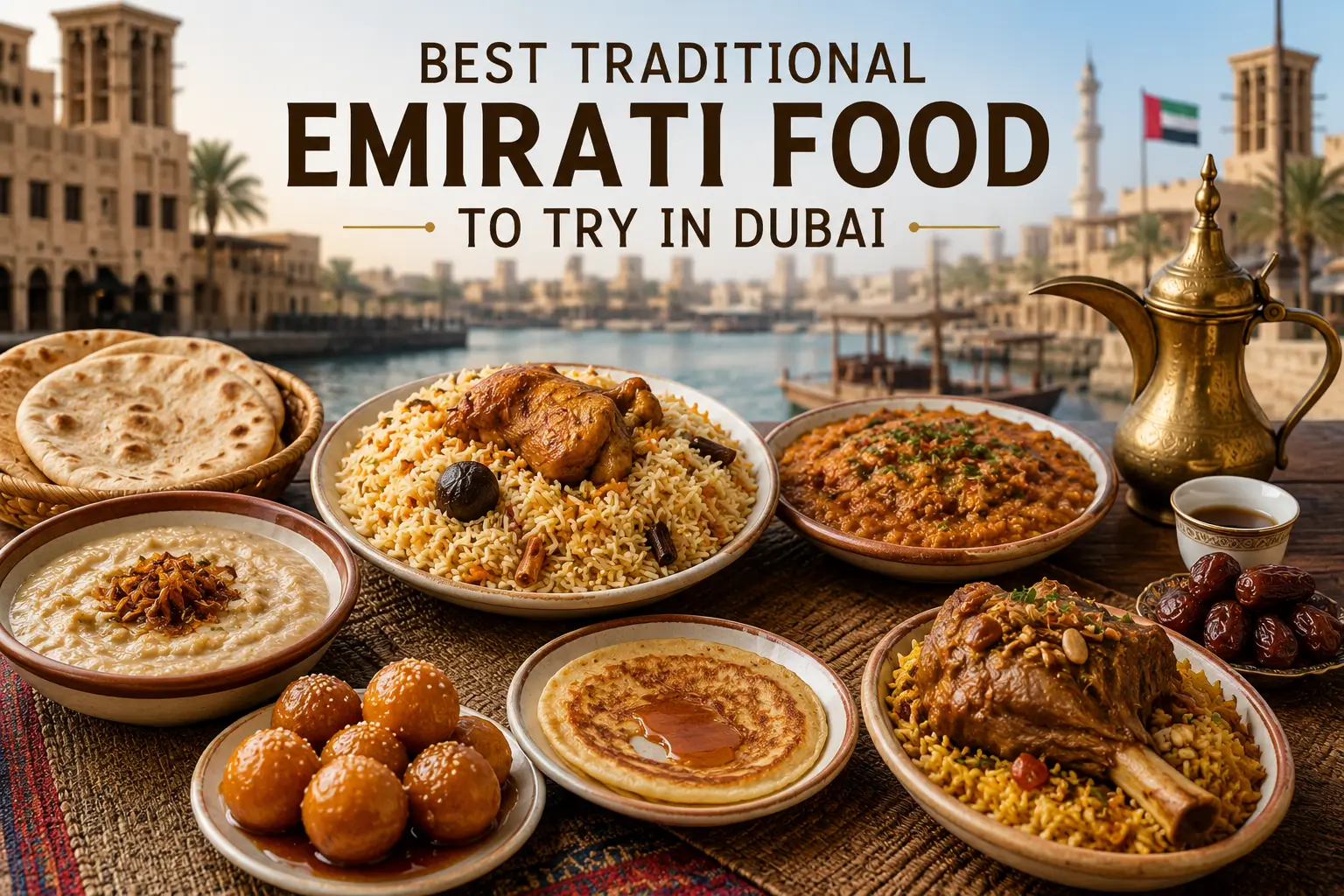
Traditional Emirati food in Dubai offers a delicious way to discover the UAE’s cultural heritage, international restaurants, and modern dining experiences, but some of the most memorable flavours in the city come from a much older tradition. Traditional Emirati food reflects the UAE’s desert lifestyle, coastal heritage, local hospitality, and centuries of trade with neighbouring regions. From fragrant rice and slow-cooked meat to fresh seafood, dates, saffron, cardamom, and sweet treats, Emirati cuisine has a distinctive character. Many dishes were created around ingredients that were practical and available to local communities, while spices and cooking techniques were influenced by the UAE’s historic trading connections.
If you are visiting Dubai and want to experience more than its famous international food scene, trying local Emirati dishes is a great way to understand the city’s cultural roots. Whether you are exploring Al Fahidi Historical Neighbourhood, walking around Dubai Creek, or simply looking for an authentic local meal, there are plenty of opportunities to taste these traditional flavours.
What Makes Traditional Emirati Food Special?
Traditional Emirati food in Dubai offers travellers a delicious way to discover the UAE’s cultural heritage. Dubai is famous for its luxury hotels, international restaurants, and modern dining experiences, but some of the city’s most memorable flavours come from a much older tradition.
Historically, communities living along the coast relied heavily on fish and seafood, while people living in desert and oasis environments used ingredients such as dates, camel products, lamb, and goat. The arrival of rice and spices through regional trade gradually shaped many of the dishes enjoyed today. Another important part of Emirati food culture is hospitality. Arabic coffee, known as gahwa, and dates are traditionally offered to guests as a gesture of welcome. Coffee is often flavoured with cardamom and sometimes saffron and served in small cups called finjans.
Machboos: A Must-Try Emirati Rice Dish
If you are trying traditional Emirati food for the first time, Machboos is one of the best dishes to start with. Machboos is a fragrant rice dish prepared with meat, chicken, fish, or sometimes shrimp. The ingredients are cooked with a blend of spices and dried lime, locally known as loomi. The rice absorbs the flavour of the stock and spices, creating a dish that is aromatic, savoury, and satisfying.
Depending on the restaurant or family recipe, you may notice variations in the spices and ingredients. These variations show how traditional Emirati food can differ from one recipe and restaurant to another. Some versions are served with vegetables, onions, or potatoes. This variation is part of what makes traditional Emirati cooking interesting. For travellers, Machboos is particularly good for lunch or dinner because it gives you a clear introduction to the flavours that define local cuisine.
Al Harees: A Traditional Comfort Food
Al Harees is another important Emirati dish, particularly associated with Ramadan, celebrations, and family gatherings. It is made by slowly cooking wheat and meat together until they develop a soft, smooth consistency. The long cooking process creates a mild and comforting flavour rather than a heavily spiced one.
Harees may look simple, but its importance goes beyond taste and reflects the traditions behind Emirati food culture. It is closely connected with communal meals and traditional occasions, making it a dish that offers a glimpse into Emirati food culture rather than simply being another item on a restaurant menu. If you prefer food with a soft texture and gentle seasoning, Harees can be an excellent choice. It is also a good introduction to traditional Emirati food for visitors who prefer mild and comforting flavours.
Khuzi: A Dish Made for Sharing
Khuzi is one of the traditional Emirati dishes often associated with celebrations and large family gatherings. It is often finished with nuts and other garnishes, creating an impressive meal that is designed to be shared. The UAE Government describes Khuzi as whole roast lamb or goat served on spiced rice, making it one of the more substantial traditional dishes associated with Emirati cuisine.
Because of its size and presentation, Khuzi is especially suitable when travelling with family or a group of friends. Sharing a dish like Khuzi also reflects the communal character often associated with traditional Emirati food. It is the kind of meal that feels less like a quick bite and more like a complete dining experience.
Al Madrooba: A Taste of the UAE’s Coastal Heritage
Dubai’s history is strongly connected with the sea, fishing, and pearl diving, and that heritage can still be seen in traditional food. Al Madrooba is made with salted fish, spices, and a thick sauce. It has a hearty consistency and is particularly associated with traditional meals and Ramadan.
For visitors who enjoy seafood, Madrooba is worth seeking out as an example of traditional Emirati food influenced by Dubai’s coastal heritage. Its flavour is quite different from the grilled fish or seafood dishes commonly found in modern Dubai restaurants, making it a more distinctive way to experience local cuisine.
Chabab: A Traditional Emirati Breakfast
Emirati cuisine is not only about large rice and meat dishes. Chabab is a traditional Emirati breakfast that gives visitors a lighter way to experience local cuisine. It is prepared with ingredients such as flour, eggs, sugar, and spices including cardamom and saffron, and is commonly served with date syrup.
The combination of a lightly spiced pancake with sweet date syrup makes Chabab an easy choice for travellers who want to begin their day with something traditional but not too heavy. It is a simple way to discover the lighter side of traditional Emirati food. It is also a good reminder that dates are much more than a snack in Emirati cuisine. Date syrup and dates are used in both sweet and savoury preparations.
Luqaimat: The Emirati Sweet You Should Not Miss
No introduction to traditional Emirati food would be complete without Luqaimat. These small fried dough balls are crispy on the outside and soft inside, and they are usually served with date syrup, honey, or another sweet topping. They are particularly popular during Ramadan and special occasions.
Luqaimat is an easy dessert to share, so it works well after a large meal. For anyone exploring traditional Emirati food, this dessert is an easy and enjoyable way to finish a meal. The combination of crunchy dough and sweet syrup also makes it popular with both adults and children. If you are exploring Dubai with your family, this is one traditional dessert that is unlikely to disappoint.
Emirati Coffee and Dates: More Than Just a Drink
Sometimes the simplest part of a meal tells you the most about a culture. In the UAE, gahwa and dates are deeply connected with hospitality. Traditional Arabic coffee is usually lightly brewed and flavoured with cardamom, while dates provide a natural sweetness alongside the drink. Offering coffee and dates to visitors is an established part of Emirati hospitality. This tradition is an important part of the culture surrounding traditional Emirati food and hospitality.
You may encounter this combination at cultural experiences, heritage restaurants, traditional homes, and other places focused on Emirati culture. For visitors using SilenceTrip to explore Dubai, adding a traditional food experience to a sightseeing itinerary can make the trip feel more connected to the city’s history. Instead of spending the entire holiday around malls and modern attractions, take some time to explore Old Dubai and discover the flavours that developed around Dubai Creek.
Where to Experience Traditional Emirati Food in Dubai
Finding authentic Emirati food in Dubai is easier when you explore areas connected with the city’s heritage. Al Fahidi Historical Neighbourhood, Dubai Creek, Bur Dubai, and Deira are useful areas to consider when looking for local and heritage-focused dining experiences.
Visit Dubai highlights several places where travellers can experience traditional Emirati cuisine, including restaurants around Old Dubai. Its cultural explorer guide also recommends places such as Arabian Tea House, Al Khayma Heritage Restaurant, and Al Fanar Restaurant & Cafe for visitors interested in traditional flavours and heritage-inspired settings. Eating near the creek, walking through an old neighbourhood, or visiting a traditional-style restaurant can help you understand the history and culture behind traditional Emirati food. Eating near the creek, walking through an old neighbourhood, or visiting a traditional-style restaurant can help you understand the connection between Dubai’s present-day identity and its past.
Tips for Trying Emirati Food for the First Time
You do not need to order everything at once. If you are new to traditional Emirati food, start with one main dish and one traditional dessert. Start with Machboos or Khuzi if you want a substantial main meal, then try Luqaimat for dessert. If you enjoy seafood, look for Madrooba or another traditional fish preparation.
It is also worth asking the restaurant about the ingredients before ordering, especially if you have allergies or dietary restrictions. Traditional recipes can vary between restaurants and families, so the same dish may taste noticeably different from one place to another. Most importantly, do not expect every Emirati dish to taste like the Middle Eastern food you may already know. Emirati cuisine has its own combination of spices, textures, sweet elements, seafood traditions, and rice-based dishes.
Why You Should Try Traditional Emirati Food in Dubai
Dubai is a city where old and new exist side by side. You can spend the morning looking at futuristic architecture and the evening walking beside Dubai Creek, surrounded by historic buildings and traditional markets. Food provides another way to experience this contrast.
Traditional Emirati cuisine tells stories about desert life, fishing communities, trade, hospitality, family gatherings, and celebrations. Ingredients such as dates, fish, lamb, rice, saffron, cardamom, and dried lime may seem simple individually, but together they create a cuisine with a strong cultural identity. So, when planning your Dubai holiday with SilenceTrip, leave some space in your itinerary for local food. Visit a heritage neighbourhood, sit down for a traditional meal, enjoy Arabic coffee with dates, and finish with Luqaimat. It is a simple way to experience a side of Dubai that skyscrapers and shopping malls cannot show you.
Final Thoughts
Trying traditional Emirati food in Dubai is one of the easiest ways to experience the cultural side of the city. Beyond the city’s luxury restaurants and international cuisine, there is a rich local food tradition built around rice, meat, seafood, dates, bread, spices, and hospitality. From a comforting plate of Machboos to sweet Luqaimat and cardamom-infused Arabic coffee, each dish offers a different taste of the UAE’s heritage.
If you are planning your Dubai trip with SilenceTrip, make traditional food part of the experience rather than treating it as an afterthought. Exploring the city’s heritage neighbourhoods and sitting down for a local meal can add a completely different dimension to your Dubai holiday.
Stay Connected with SilenceTrip
Stay connected with SilenceTrip for family travel ideas, Dubai attraction guides, sightseeing inspiration, and practical UAE travel tips. Follow SilenceTrip on Facebook and Instagram for new travel ideas and inspiration for your next Dubai adventure.
FAQs - Best Traditional Emirati Food to Try in Dubai
Machboos is one of the most well-known traditional Emirati dishes. It is a spiced rice dish prepared with meat, chicken, fish, or other ingredients and commonly flavoured with dried lime and aromatic spices.
Machboos is a good starting point because it combines several classic flavours of Emirati cuisine. You can also try Luqaimat if you want to start with a traditional dessert.
Traditional Emirati food is generally aromatic and well-seasoned rather than extremely hot. Spices such as cardamom, saffron, cinnamon, turmeric, and dried lime are commonly used to build flavour.
Old Dubai is a good area to explore, particularly around Al Fahidi Historical Neighbourhood, Dubai Creek, Bur Dubai, and Deira. Heritage restaurants and traditional cafés in these areas can provide a more local dining atmosphere.
Luqaimat is one of the most popular traditional choices. These small fried dough balls are crispy outside, soft inside, and commonly finished with date syrup or honey.