

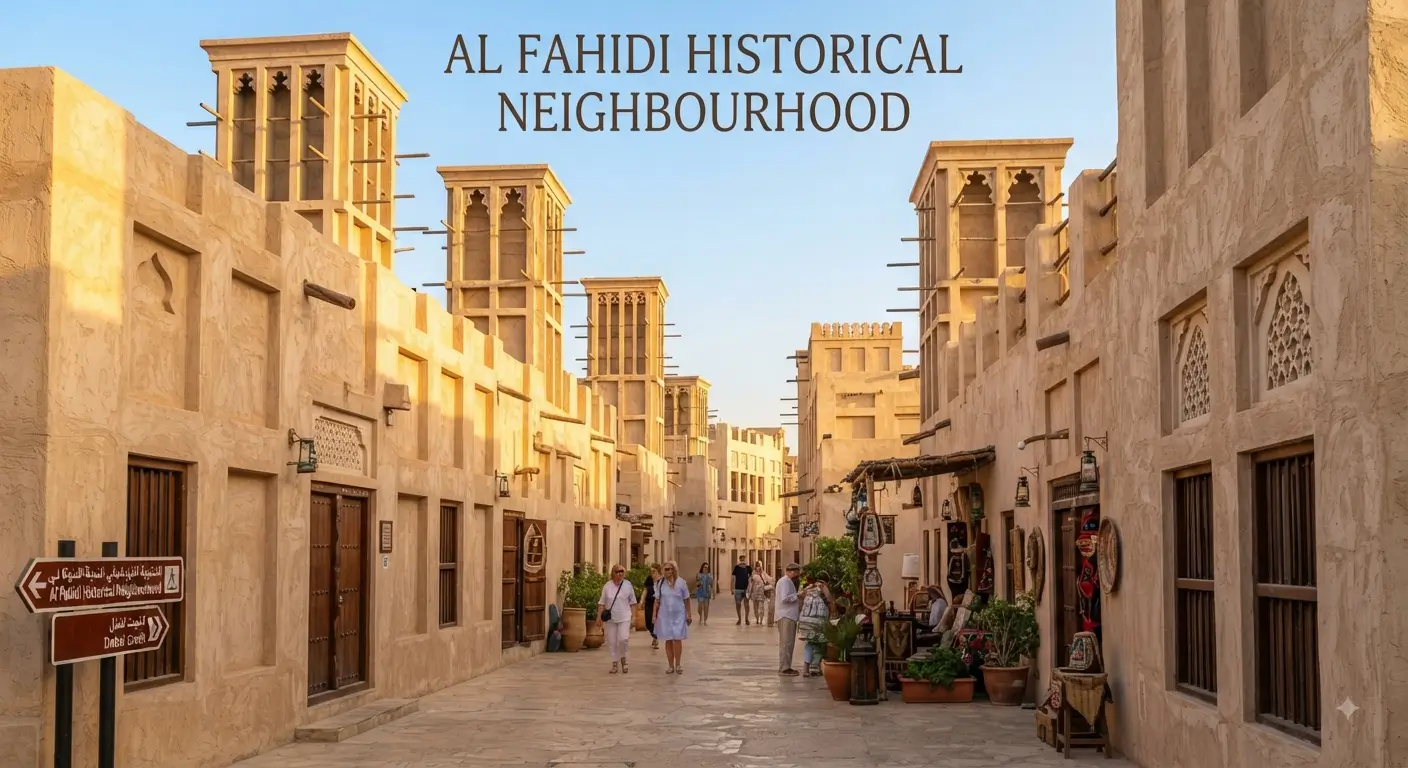
Dubai is often recognised for its futuristic skyline, Al Fahidi Historical Neighbourhood Dubai offers a chance to step away from the city’s modern attractions and discover its traditional architecture, culture, and heritage. luxury shopping, spectacular attractions, and modern architecture. However, behind the city’s modern image is a fascinating history that can still be experienced today. Al Fahidi Historical Neighbourhood is one of the best places to discover Dubai’s traditional side.
Located in Bur Dubai, Al Fahidi Dubai is known for its narrow lanes, traditional buildings, wind towers, courtyards, cultural centres, galleries, and historic atmosphere. A visit here feels very different from spending a day around Dubai’s skyscrapers and shopping malls. For travellers interested in history, architecture, photography, and Emirati culture, Al Fahidi offers a slower and more meaningful sightseeing experience. This guide explains what to see and do, when to visit, how long to stay, and what you can combine with your visit.
What Is Al Fahidi Historical Neighbourhood Dubai?
Al Fahidi Historical Neighbourhood is one of the oldest heritage areas in Dubai. The district preserves traditional buildings and architectural features that provide an idea of what life in Dubai was like before the city developed into the modern metropolis it is today. The area is also commonly associated with Al Bastakiya Dubai, a historic name often used when referring to Dubai’s traditional heritage district and architecture.
The area was historically home to merchants, traders, and families, and many of its buildings were designed around central courtyards. One of the most recognisable features is the barjeel, or traditional wind tower. These towers helped circulate air through buildings and provided natural cooling before modern air-conditioning was available. Today, many of the old buildings have been restored and are used as museums, cultural centres, galleries, cafés, and other heritage spaces.
Why Visit Al Fahidi Historical Neighbourhood?
A visit to Al Fahidi gives you the opportunity to experience a quieter and more traditional side of Dubai. Instead of large roads and skyscrapers, you will find shaded walkways, old stone and plaster buildings, wooden doors, courtyards, and small cultural spaces.
It is also a good destination if you want to understand how Dubai developed around trade, the creek, fishing, and pearl diving before its rapid economic growth. For first-time visitors, the neighbourhood can add variety to a Dubai itinerary. After visiting places such as Burj Khalifa, Dubai Mall, or Palm Jumeirah, exploring Al Fahidi provides a completely different perspective of the city.
Things to Do in Al Fahidi Historical Neighbourhood
There are many things to do in Al Fahidi Historical Neighbourhood, from exploring historic lanes and traditional architecture to visiting cultural spaces and walking towards Dubai Creek. You can explore most of the neighbourhood on foot, and there is no need to rush from one attraction to another. The best part of the experience is often simply walking through the historic lanes and discovering interesting buildings and cultural spaces along the way.
Explore the Historic Lanes and Architecture
Begin your visit to Al Fahidi Dubai by walking through its narrow historic lanes. The traditional architecture is one of the main reasons travellers visit the area. The traditional architecture is one of the main reasons people visit Al Fahidi. Look for wind towers, wooden doors, traditional courtyards, stone walls, and decorative details on the older buildings. Many streets are quieter than the busy tourist areas of modern Dubai, making them ideal for a relaxed walk.
The neighbourhood is also a popular photography location. The earthy colours and traditional structures create a very different backdrop from Dubai’s glass skyscrapers. If you enjoy photography, take your time rather than simply walking from one attraction to another. Small details such as doors, windows, alleyways, and architectural patterns can make interesting photographs.
Visit Cultural Centres and Heritage Spaces
Al Fahidi is home to several cultural and creative spaces where visitors can learn more about the UAE’s traditions. The Sheikh Mohammed Centre for Cultural Understanding is particularly useful for travellers who want to learn about Emirati culture, customs, food, and local traditions. Depending on the programme available during your visit, you may be able to take part in cultural discussions or traditional experiences.
The neighbourhood also contains art galleries and creative spaces housed inside restored buildings. These provide an opportunity to see contemporary artwork while surrounded by historic architecture.
Explore the Al Fahidi Fort Area
The neighbourhood is close to Al Fahidi Fort, one of Dubai’s most important historic landmarks. The fort provides an interesting connection to the city’s past and its development over time.
The surrounding area is worth exploring even if you are mainly interested in walking through the heritage district. Check current opening information before your visit because attraction access and operating arrangements can change.
Walk Towards Dubai Creek
One of the best things to do after exploring Al Fahidi Historical Neighbourhood Dubai is to walk towards Dubai Creek. The creek played an important role in Dubai’s early development. It was closely connected with fishing, pearl diving, trading, and transportation, and it remains an important part of the city’s heritage.
Once you reach the creek, you can watch traditional boats, explore the surrounding area, or take an abra ride across the water. The short ride is an easy way to experience one of Dubai’s traditional forms of transport.
Visit the Traditional Souks
If you have additional time, continue towards the traditional souks near Dubai Creek. The area offers a different shopping experience compared with Dubai’s large modern malls. You can browse traditional products, textiles, spices, souvenirs, and other items while exploring the older commercial side of the city. Combining Al Fahidi, Dubai Creek, an abra ride, and the nearby souks can make a very good half-day heritage itinerary.
Best Time to Visit Al Fahidi Historical Neighbourhood Dubai
The best time to explore Al Fahidi Historical Neighbourhood Dubai is generally during the cooler months. The best time to explore Al Fahidi Historical Neighbourhood is generally during the cooler months. Since much of the experience involves walking outdoors, comfortable weather can make a significant difference.
Morning visits can be peaceful and are useful if you want to explore the area before it becomes busier. Late afternoon is another good option because you can explore the neighbourhood and then continue towards Dubai Creek around sunset. During the hotter months, an early morning visit may be more comfortable. Carry water and take breaks whenever necessary.
How Long Do You Need to Explore Al Fahidi?
A basic visit can take around one to two hours, but there is enough nearby to spend half a day in the area. If you only want to walk through the historic neighbourhood, take photographs, and see the architecture, a shorter visit may be enough.
However, if you want to visit cultural spaces, explore Al Fahidi Fort, walk along Dubai Creek, take an abra ride, and visit the souks, it is better to allow several hours. The area works particularly well as part of a wider heritage day rather than as a rushed stop between major attractions.
What to Wear and Carry
Comfortable walking shoes are important because you will spend much of your visit walking through narrow lanes and nearby heritage areas. Light and breathable clothing is suitable for warm weather, while a light jacket can be useful during cooler winter evenings. Since Al Fahidi is a cultural and historic area, modest and respectful clothing is recommended. Sunglasses, sunscreen, and a bottle of water are also useful, especially if you are visiting outside the cooler months.
Is Al Fahidi Suitable for Families?
Yes, Al Fahidi can be an enjoyable destination for families, particularly if children are interested in history, culture, architecture, or exploring new places. You can keep the visit relaxed rather than following a strict schedule. Children may enjoy walking through the old lanes, seeing traditional buildings, riding an abra, and exploring the nearby souks.
If you are travelling with young children, plan breaks during the visit, especially in warmer weather. Combining the neighbourhood with a short creek ride can also add variety to the experience.
Al Fahidi for Couples and Photographers
Al Fahidi is also a good choice for couples looking for a quieter experience away from Dubai’s busiest attractions. The historic streets, traditional buildings, and creek views create plenty of opportunities for photographs.
Photographers can find interesting subjects throughout the neighbourhood, from traditional doors and wind towers to architectural details and narrow alleyways. Visiting during the morning or late afternoon can provide softer natural light and a more comfortable atmosphere for walking around.
Planning Your Visit with SilenceTrip
Adding Al Fahidi Historical Neighbourhood to your Dubai itinerary is an easy way to balance modern attractions with culture and history. SilenceTrip helps travellers explore Dubai tours, attraction tickets, sightseeing experiences, cultural activities, and family-friendly experiences. You can include Al Fahidi as part of a wider sightseeing day and combine it with Dubai Creek, an abra ride, traditional souks, and nearby heritage attractions.
If you have only a few days in Dubai, you do not need to dedicate an entire day to the neighbourhood. A half-day itinerary can give you enough time to explore the historic area without taking too much time away from other attractions.
Final Thoughts
Al Fahidi Historical Neighbourhood offers a fascinating glimpse into Dubai’s past. Its traditional architecture, wind towers, historic lanes, cultural centres, art spaces, and location near Dubai Creek make it one of the most interesting places to visit beyond the city’s modern attractions. The experience is less about ticking attractions off a list and more about slowing down and discovering another side of Dubai.
You can walk through old lanes, learn about Emirati culture, take photographs, ride an abra, and explore the nearby traditional souks. Whether you are visiting Dubai for the first time, travelling with family, or returning to discover something different, Al Fahidi is worth adding to your itinerary. With sensible planning and support from SilenceTrip, you can combine this heritage experience with other Dubai attractions and create a well-balanced travel day.
Stay Connected with SilenceTrip
Stay connected with SilenceTrip for family travel ideas, Dubai attraction guides, sightseeing inspiration, and practical UAE travel tips. Follow SilenceTrip on Facebook and Instagram for new travel ideas and inspiration for your next Dubai adventure.
FAQs - Al Fahidi Historical Neighbourhood
Al Fahidi is famous for its traditional architecture, historic buildings, wind towers, narrow lanes, cultural centres, galleries, and connection to Dubai’s heritage.
Yes. It is particularly worthwhile for travellers interested in Dubai’s history, Emirati culture, traditional architecture, photography, and quieter sightseeing experiences.
Around one to two hours is enough for a basic walk through the neighbourhood. If you also visit cultural spaces, Dubai Creek, the souks, and take an abra ride, consider spending three to four hours in the area.
You can combine your visit with Dubai Creek, an abra ride, traditional souks, Al Fahidi Fort, and nearby cultural attractions. These can easily form a half-day heritage itinerary.
The cooler months are generally the most comfortable because much of the area is explored on foot. Morning and late afternoon are also good times for walking and photography.